 |
 |
 |
|||||
|
Mana:
Dennis explains the concept of mana, and its connection to voyaging: “The five descendants of ‘Aikanaka and Hina-hānai-a-ka-mālama down to Laka and Luanu‘u are associated with voyaging. The theme of their stories is the importance of maintaining or restoring chiefly mana through contact with an ancestral homeland. “Mana is the creative and procreative power of the Universe: it makes plants grow, fish and animals multiply, the human population increase; it makes human projects, such as building houses, canoes, lo‘i (kalo ponds), or fishponds successful. It is embodied in “specific gods, spirits, individuals, rites, or objects. Mana was exhibited in persons, in power, strength, prestige, reputation, skill, dynamic personality, intelligence; in things in efficacy, in ‘luck’; that is in accomplishment. These qualities were not mana; they were the evidences of mana, which was itself but the focusing and transmission of the potency of nature.”
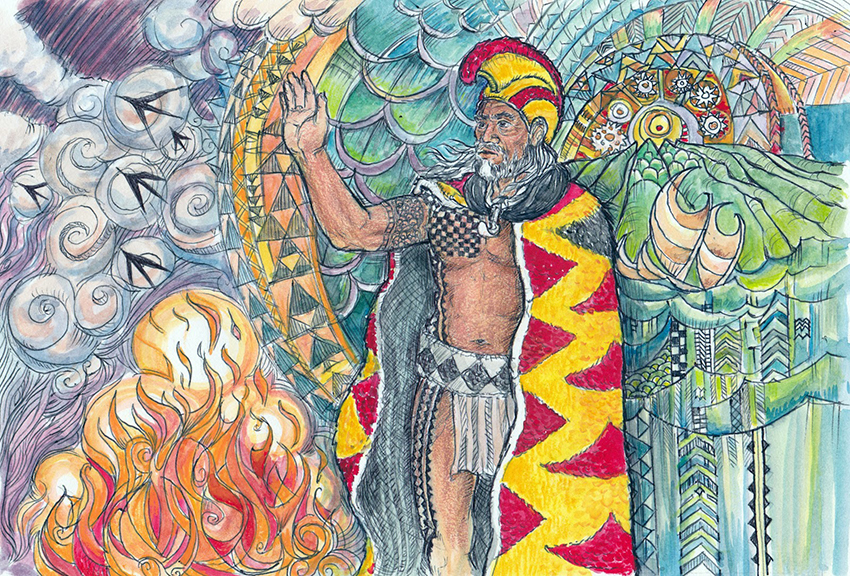
“A ruling chief was at the apex of Hawaiian society and had the greatest concentration of mana on earth because he was closest to the gods. His mana came from the gods from whom he was descended. He was “the means by which supernatural efficacy, mana, is conveyed to society at large. The chief is mediator, receiving and transmitting the offerings of the people to the ancestral and tribal deities. It is he who, on behalf of his people, recites the appropriate ritual formula for securing rain, bountiful harvests, success in fishing, or victory in war.” "His mana was revealed in great achievements and the wealth and productivity of his lands: “The wresting of food and material goods from nature was a fundamentally religious process precisely because the natural world was the realm of the gods. The chiefs occupied the central role in the ritual regulation of production.” “Because the ali‘i embodied the mana of his land and people, only their lengthy genealogies were recorded in memory. Kirch points out that “descent and control went hand in hand” (257). The chiefly right to control lands was established through genealogy. Kamakau notes that “the children of the maka‘āinana were taught only the names of their fathers, mothers, and grandparents.”
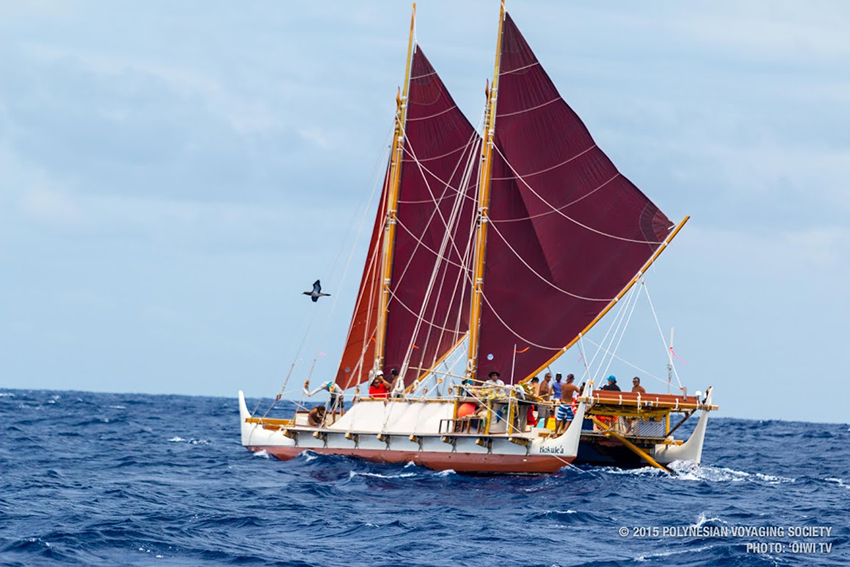
“Chiefly genealogies record the flow of mana from the first man and woman who received the original mana from the gods, down through the generations. Narratives accompanying the genealogies tell how the ali‘i maintained their mana by worship of and obedience to the gods, who required fair and just rule, and by marriage to someone of like rank; how they increased their mana through marriage with a person of higher rank; how they lost mana when they disobeyed the gods and behaved badly or committed wrongs against the people and thus, became separated from the divine source of mana. “The voyaging stories of Hawai‘i record the flow of mana through ties between the new homeland (Hawai‘i) and the old (Kahiki, Tahiti, or any foreign land). The voyaging canoe was the means for transporting this mana, embodied in persons or objects, from one island to another. “The story of each chief begins with his birthplace, where the mana of the gods entered him. (A form of biographical chant first composed in Hawai‘i for Kapawa, 26 generations after Papa and Wākea, records the specific places where the caul, placenta, and navel cord were deposited). If the place of a chief’s birth was different from the home of his maternal ancestors, the father had to return to that home to retrieve a birth-gift embodying the mana of these ancestors. (Tracing ancestry through mothers was more certain than tracing it through fathers.) The gift was something sacred, identified by the color red (‘ula). “Thus, in the fifth month of his wife’s pregnancy, ‘Aikanaka’s son Hema sailed from Hawai‘i to the home of his wife’s parents in Kahiki to get a birth-gift for his son Kaha‘i the ‘apo‘ula, a sacred wreath of red feathers, or the ‘ape‘ula, possibly a sacred red kapa cloth used to wrap an image of the god Kū. Later in this cycle of voyaging, Kaha‘i’s son Wahieloa sailed from Hāna, Maui, to Punalu‘u in Ka‘ū on Hawai‘i Island, the home of his wife’s maternal ancestors, to search for a birth gift called “Ala-koiula-a-Kāne” as a toy for his son Laka."
|
|
|||||
|
|||||
