 |
 |
 |
|||||
|
Mōkapu Burials:
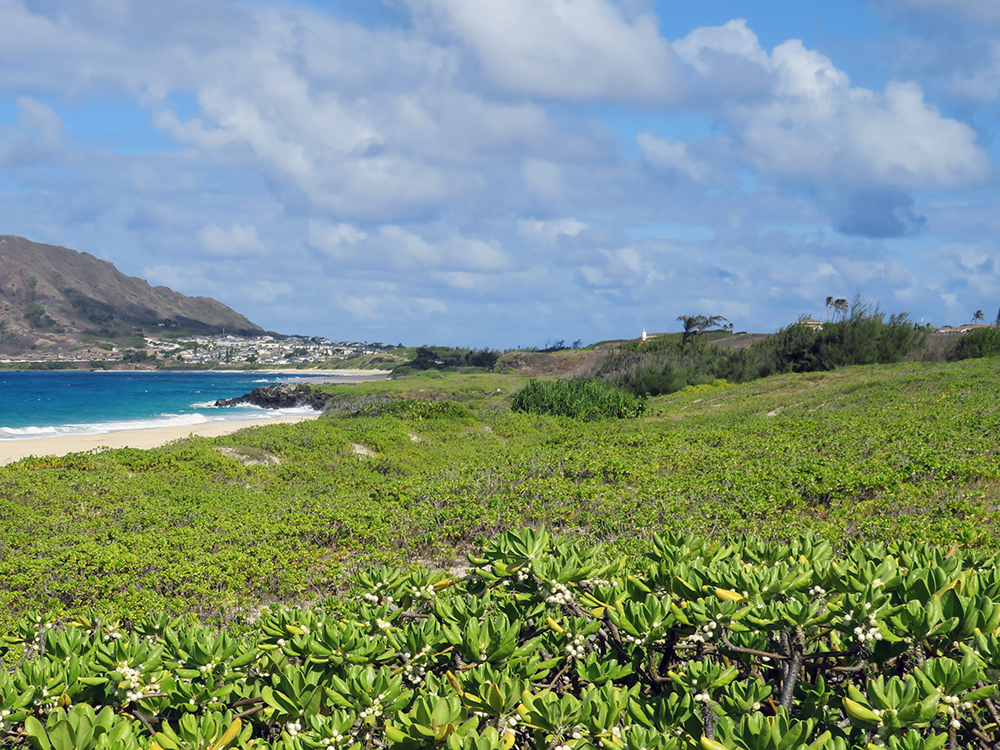
“We’re in He‘eia ahupua‘a and this is the ‘ili of Mōkapu,” June points out, as we stand near Kū‘au. “The ancient ones buried their loved ones out in these dunes. There were dunes that were in He‘eia, that’s where we are now, and then dunes that are in Kāne‘ohe more to the east of us. That’s the ‘ili of Heleloa, and over there where the housing is. And in front of that, there’s the beach, and then it goes up the vegetation, and on top there. That’s the highest intact dune that we still have, and the fewest number of ‘iwi were recovered from there. So we think that there’s still a lot of ‘iwi that are still in the dunes over there. 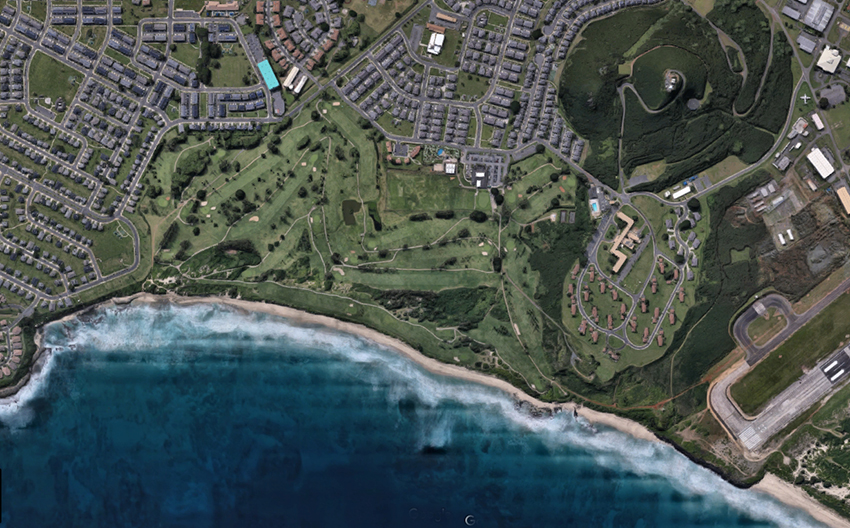
“On this He‘eia side, there was a locale where between 1938 to 1940, Bishop Museum and UH archaeologists came out here and recovered 800 sets of remains and took them to Bishop Museum. And then they went over to the dunes over in Heleloa, and they recovered about another 600-700 sets of remains from two locales over there. "On each of the locales where the ‘iwi were found, they were found on the lee side of the dunes. The Hawaiians knew that the front, the ocean-side, the trade winds are going to shift the sands. And sure enough, this beach here, the sand moves one side to the other depending on the surf. So, the side that was protected was the lee side. The ‘iwi that were removed from here more towards where the runway is now. They did flatten the dunes there to put the runway in. 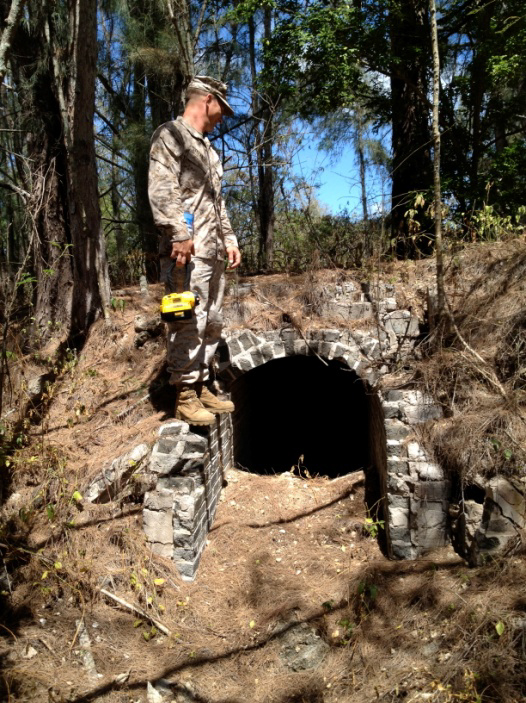
“Now on the base there are sand dunes,” Mahealani says, “some of which are in He‘eia ahupua‘a. And the sand dunes contain thousands of burials from previous wars among the islands. To me, the people buried in the sand dunes were not local people. There were people who were invading and who were killed. They were buried there because if they were local people, family members would have come and reclaimed them, and would have taken the remains back with them. So I think that most of the sand dunes were filled with people who were invading O‘ahu.” “I grew up in the house,” Ian says, pointing. “In 1982, my brother found a skeleton on the beach on this side. Unfortunately, a post had gone through it, but it was a Hawaiian human burial in the sand. When we went to look around some more, there was another one that was in the wash zone where the ocean comes up at high tide, and then exposed at low tide. "And there in there was a burial that was half-way petrified between the mud and the sand in the lithification process. Half of it was still carbon, half of it had lithified, and it still had most of the skull, both rows of teeth, and everything. Now, due to erosion fro mthe surf, the whole skull is gone, both rows of teeth are gone, the bundle is still there. Very heavy.” “When they built the base,” Mahealani continues, “they used the sand to make cement, to build the buildings on the base, including several stories underground. So some of those are walls that are built into the marine base, contain the ‘iwi of ancestors that were buried in the sand dunes.” 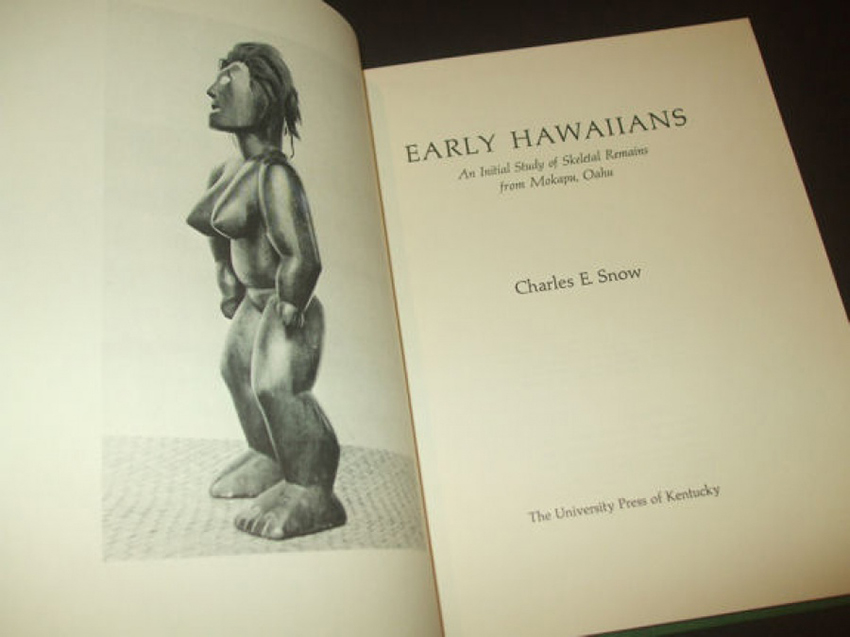
“Heleloa is a long, sandy beach over by where the airfield is,” Kalani relates. “After World War II, in the early fifties, the military wanted to expand, to bulldoze a big swath of land. And they uncovered all of this skeletal material, so they decided, ‘Well we’d better call up Bishop Museum and have them come and have a look.’ Bishop Museum archaeologists went out there and recovered over one thousand full and partial skeletons. This skeletal population was pre-Christian, because there were no Western grave goods with the bodies. and so this was a major find.” “On Mōkapu, there were the burial grounds,” Chuck adds, “where about 1,000 human remains were discovered on the makai side of Ulupa‘u Crater, north side. There’s a sandy beach in the area. The skeletal remains were removed in order for the military to develop that area into a landing strip and training ground. The remains were stored at the Bishop museum for protection and research.. 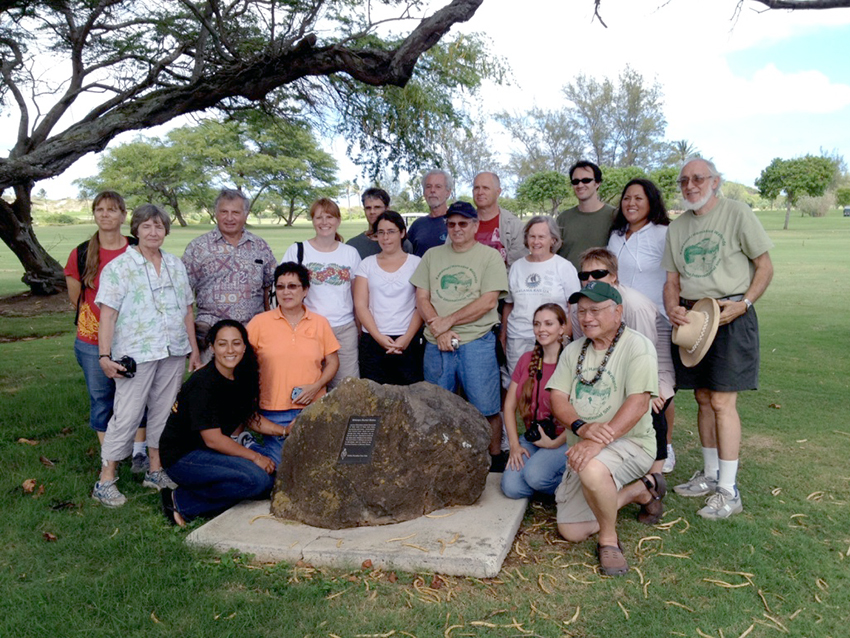
“All that material was taken back to Bishop Museum for study,” Kalani says, “and the remains were studied by archaeologists. A major publication resulted, and this publication is very informative about not only what they found, but the meaning of things, along with some additional, appended articles on health and nutrition. For instance, what diseases they detected, childhood rearing, and so forth . It’s a major book for anyone wanting to know about pre-Cook Hawai‘i.” “However, the Hawaiian organizations—OHA, the Mōkapu descendants—wanted the ‘iwi to be returned back and reinterred in a special area on Mōkapu,” Chuck points out. “And this has been in process and has been going on for several years. As to whether it has been completely done, I don’t know that part because it’s an ongoing discussion.” “Various Native Hawaiian organizations and families that have formally come forward,” June points out, “and said they’re affiliated with the ‘iwi that are found here. So whenever any of our ground-disturbing activities uncover ‘iwi, federal law requires that we contact the known descendants and claimants. It’s important. Everybody has a role to play, and there’s a lot that goes into that out here, especially for the protection of the ‘iwi.” |
|
|||||
|
Pacific Worlds > He‘eia, O‘ahu > Memories > Mōkapu Evictions |
||||
